
Why does cargo slip on forks—and what really helps
It happens regularly in everyday warehouse operations:
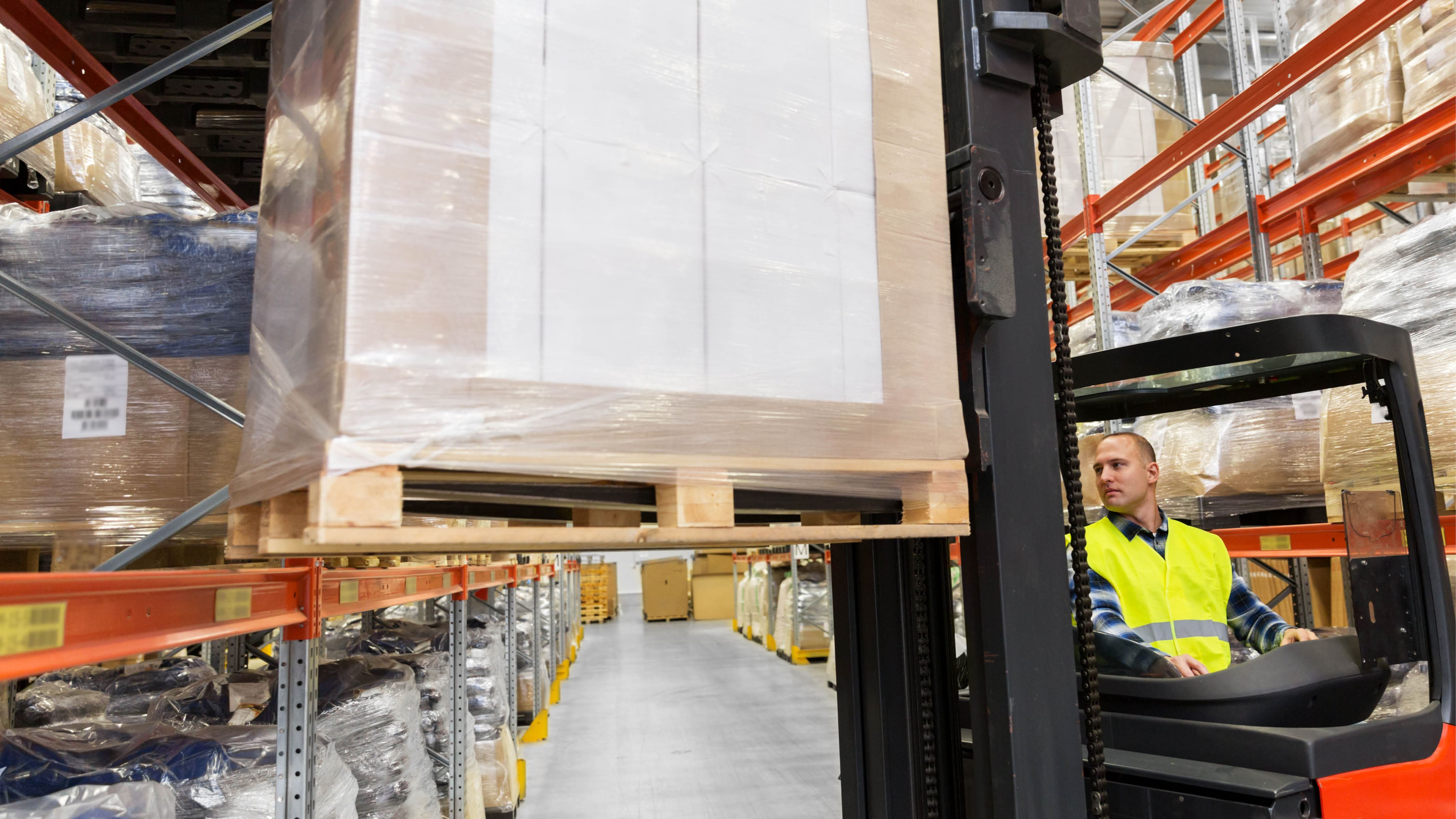
The load is securely positioned on the forks, the forklift starts moving—and after just a short distance, the pallet has shifted. Sometimes only slightly, other times so much that the transport has to be stopped.
However, loads slipping on the forks is not a coincidence, but almost always the result of specific conditions.
The most common causes in practice
In most cases, it is not driving errors but rather normal operational movements that trigger the slippage:
- Light braking or starting
- Unevenness in the floor
- Lifting or setting down the load
Added to this is a crucial factor:
Forks are made of steel and therefore offer very little friction on wooden, plastic, or cardboard pallets. This quickly creates an unstable situation, especially with wrapped or smooth goods.
So when a load slips on a forklift, it’s less the driver’s fault than the contact surface between the fork and the load.
Why this problem should be taken seriously
Slipping cargo means more than just a few lost seconds:
- Damaged goods or packaging
- Additional corrections and interruptions
- Increased risk to people in the vicinity
In the context of forklift safety and workplace safety in the warehouse, slipping cargo is a real source of danger and costs
Why Driving More Carefully Isn’t Enough
Many companies try to solve the problem by driving more slowly or increasing vigilance. This works in the short term, but it doesn’t address the root cause. Under time pressure or with rotating shifts, it’s impossible to ensure perfect caution on a consistent basis.
A sustainable solution must therefore be technical, not just organizational.
Anti-slip protection where it matters
Increasing friction directly on the forks has proven effective.
Magnetic anti-slip layers for the fork blades ensure that the load remains stable—without changing the workflow.
Especially when it comes to load securing on forklifts, such solutions are a simple way to noticeably improve safety and process stability.
In the CleverForks online shop, we offer the GEKKO magnetic anti-slip layers for this application. This anti-slip fork cover attaches magnetically to the fork blade in just a few seconds and effectively reduces the risk of goods slipping.

Conclusion
Loads shifting around is not an inevitable part of warehouse operations. The causes are well-known, and the solutions have been proven in practice. By specifically increasing the friction between the load and the forks, you can reduce damage, ease the burden on drivers, and improve workplace safety in the warehouse—without adding any extra complexity.

Leave a comment
This site is protected by hCaptcha and the hCaptcha Privacy Policy and Terms of Service apply.