
Forklifts in the Warehouse: Where the Greatest Accident Risks Lie—and What Really Helps
Internal transport using forklifts is an indispensable part of modern warehouses. At the same time, industrial trucks are among the leading causes of accidents in logistics and industry. Many of these accidents are not caused by a lack of training, but rather by poor visibility, shifting loads, or inadequate safety equipment.
In this article, we highlight the most common causes of forklift accidents—and the practical solutions that can help significantly reduce risks.
When the driver can't see what's happening ahead
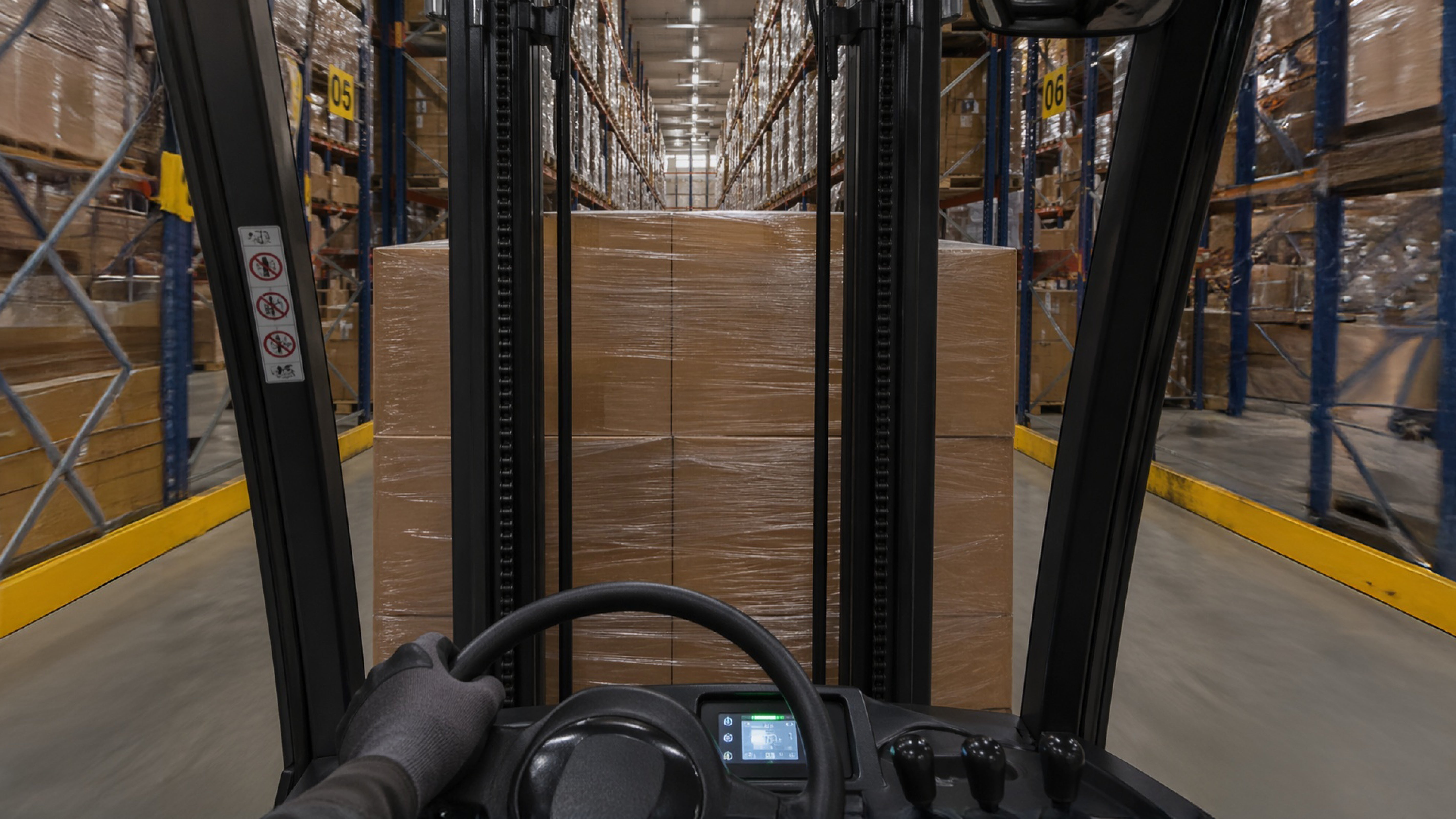
Anyone who regularly operates a forklift is familiar with the problem: tall pallets, bulky goods, or narrow aisles severely restrict visibility. Especially when reversing or maneuvering in high-rack warehouses, situations can quickly become difficult to assess.
In practice, this often leads to:
- Collisions with racks
- Damaged goods
- Dangerous encounters with pedestrians
The fact that risks arise here is not a sign of poor driving practice—but often simply a matter of technology. Companies that specifically improve visibility on forklifts significantly reduce this risk. Camera systems assist the driver where the human eye reaches its limits. Rearview cameras with pedestrian detection, in particular, protect people and increase safety.
This is where LUXX camera systems come into play. Whether as the LUXX FC frontend camera or the LUXX RC rearview camera. The flexible positioning of the cameras on the vehicle and the ease of retrofitting enable a rapid improvement in visibility and immediate risk reduction for the specific application.

Shifting cargo: an underestimated risk
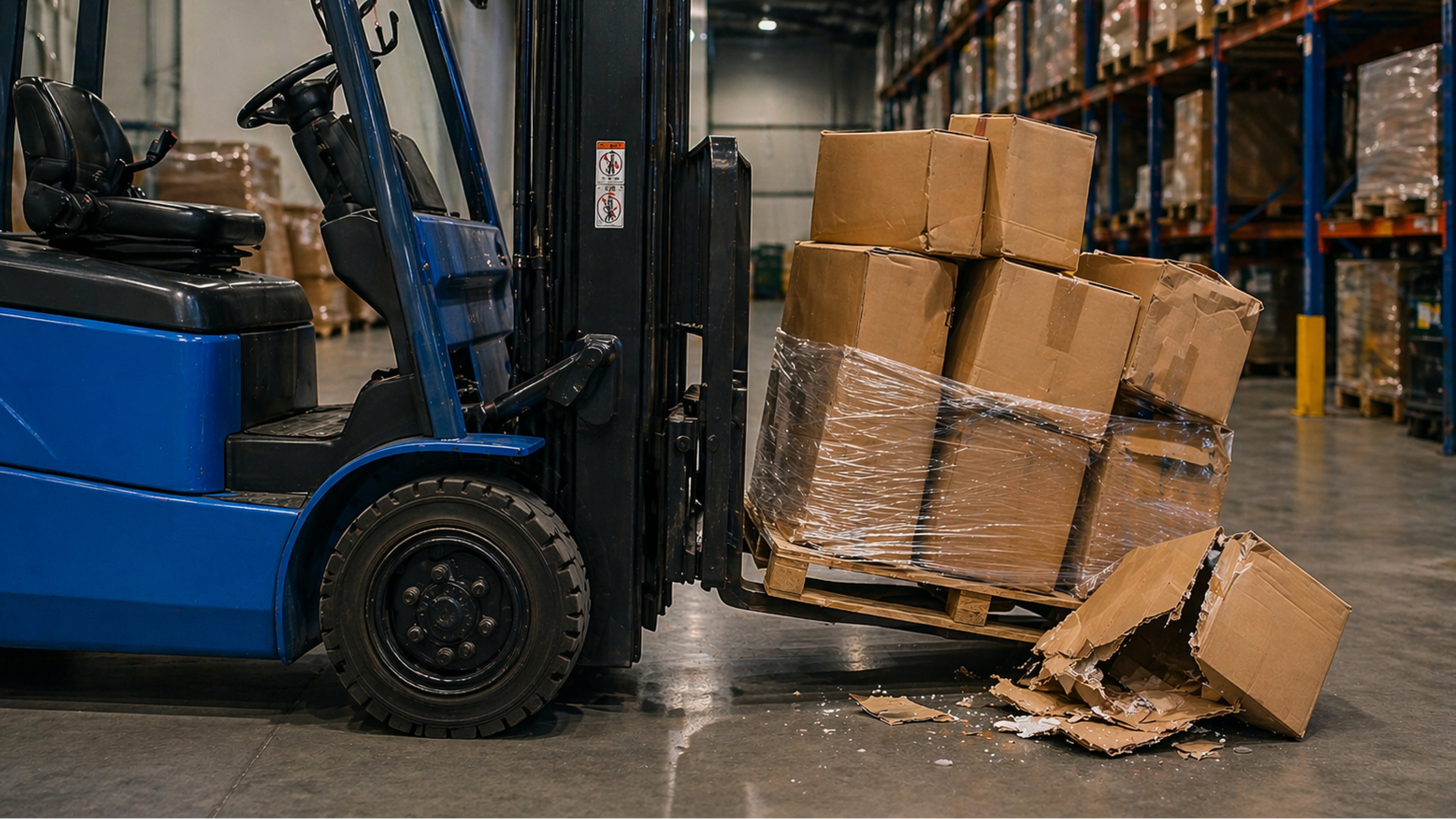
Another issue that is often not taken seriously in day-to-day operations until something goes wrong is load securing. Many pallets appear to be stable on the forks—until movement occurs during braking, turning, or lifting.
The consequences are well known:
- Goods slide forward or to the side
- Pallets tip over
- Damage to products and floors
- Increased risk of injury to employees
Yet this risk can be reduced relatively easily. Anti-slip covers ensure that the load stays where it’s supposed to—without slowing down the workflow. Especially when it comes to load securing on forklifts, such solutions are now standard rather than optional.
At www.cleverforks.com, you’ll find the GEKKO magnetic anti-slip layer for this application. Positioned in seconds, the load remains securely on the forks, surfaces are protected, and noise is minimized.

Being seen is just as important as seeing
In many warehouses, people, forklifts, and other vehicles share the same traffic areas. This frequently leads to dangerous situations, especially in noisy environments or under poor lighting conditions.
A forklift that is spotted too late poses an unnecessary risk—especially at intersections, exits, or in narrow aisles. Better visibility makes a real difference here. It helps not only the driver but also everyone else in the vicinity to spot hazards early on.
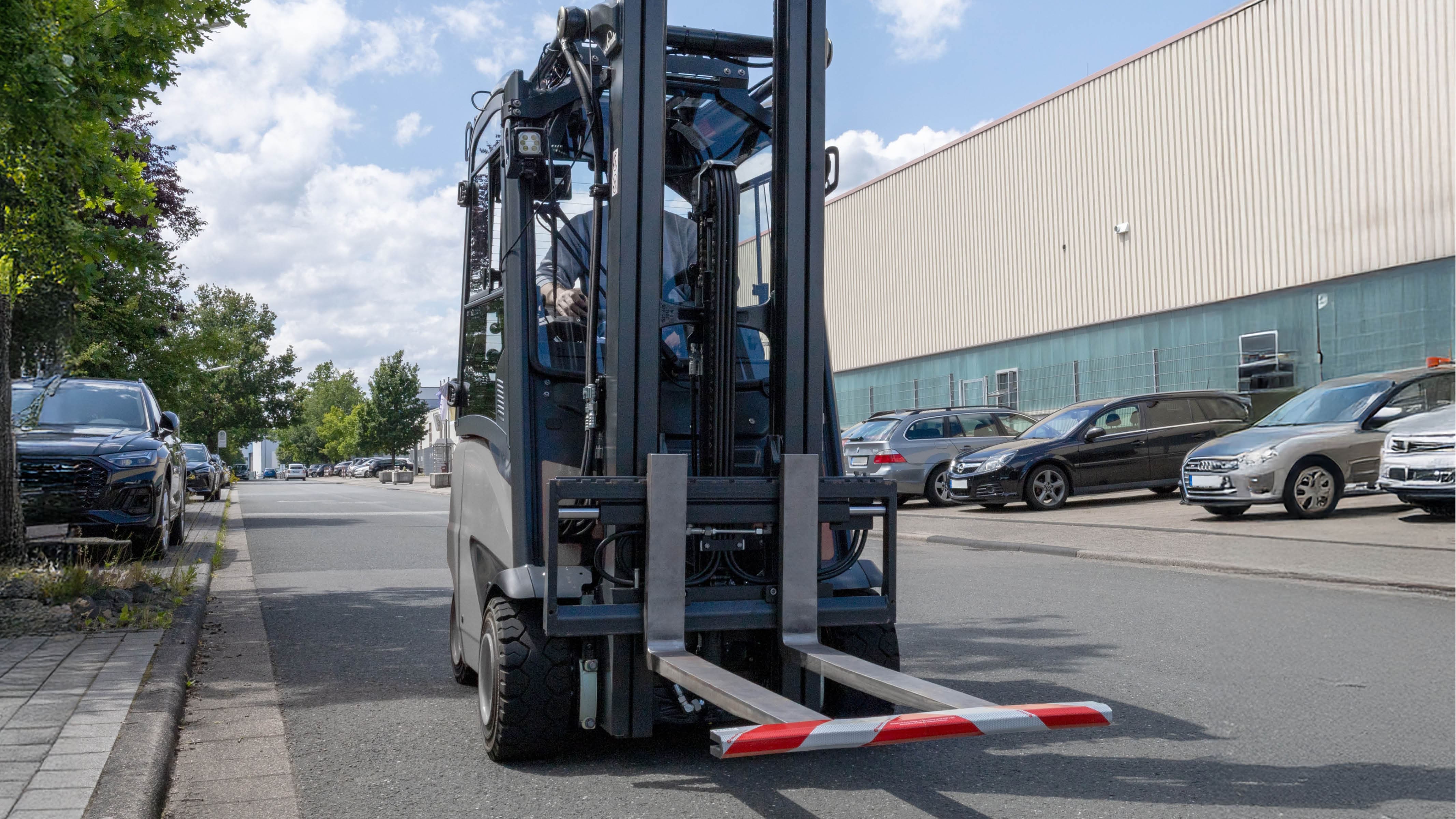
This point should not be underestimated, especially when it comes to workplace safety in warehouses. But it’s also important when using forklifts on public roads. With the ZEBRA warning bar from CleverForks, you’re investing in a simple and proven solution. Attached magnetically to the forks in a flash, the vehicle is now visible from a distance, and damage caused by protruding forks is prevented. When not in use, the warning bar can simply be carried magnetically on the forklift.

Precision, not improvisation, when moving pallets
Whether it’s a high-lift truck or a forklift—not all damage occurs at high speeds. Often, even a slightly misaligned approach is enough to damage pallets, shelves, or goods.
Many operators compensate for a lack of orientation with experience. Technical targeting aids provide additional safety here and ensure consistent, clean work processes. This pays off not only in terms of safety, but also in terms of efficiency and minimizing damage to materials.
The COBRA targeting aid is mounted at the tip of the pallet stackers’ forks and enables precise, safe alignment with load carriers for secure load handling.

Conclusion: Safety in the warehouse is usually a matter of having the right equipment
Practical experience clearly shows: Most forklift accidents are not caused by carelessness, but by recurring everyday situations. By reducing visibility issues, securing loads reliably, and improving situational awareness in the warehouse, you can measurably reduce the risk.
Targeted retrofit solutions help combine safety, efficiency, and cost-effectiveness—without unnecessarily complicating operations.

1 comment
Die Antirutschmatten finde ich besonders interessant, weil verrutschende Ladung oft erst auffällt, wenn der Stapler schon bremst oder abbiegt. Bei uns wurden manche Paletten einfach zusätzlich mit Folie umwickelt, obwohl das eigentliche Problem vermutlich die unebene Auflage war. Weil ich den Zusammenhang mit unterschiedlichen Lastarten besser verstehen wollte, habe ich auf https://www.stapler-wiener.at/neugeraete/combilift/combilift-mehrwegestapler über Lösungen für lange und sperrige Lasten gelesen. Werden Antirutschauflagen auch bei Langgut eingesetzt, oder braucht es dort wegen des seitlich verlagerten Lastschwerpunkts grundsätzlich andere Sicherungen?
Moritz Retzmann
Leave a comment
This site is protected by hCaptcha and the hCaptcha Privacy Policy and Terms of Service apply.