
Front-view camera or reversing camera on a forklift – which one do I need?
Poor visibility is a common problem when operating forklifts. Tall loads block the view ahead, blind spots occur when reversing, and in narrow warehouses there is little room to maneuver.
A camera system can specifically expand the forklift operator’s field of view. But which camera is the right one? The answer depends on where the biggest visibility problem arises during daily operations.
When is a front-facing camera useful?
A front camera is particularly useful when visibility of the forks, the load, or the area in front of the forklift is limited.
Typical applications include:
- Picking up and positioning pallets
- Loading and unloading from racks
- Working with tall or bulky loads
- Precise maneuvering into load carriers
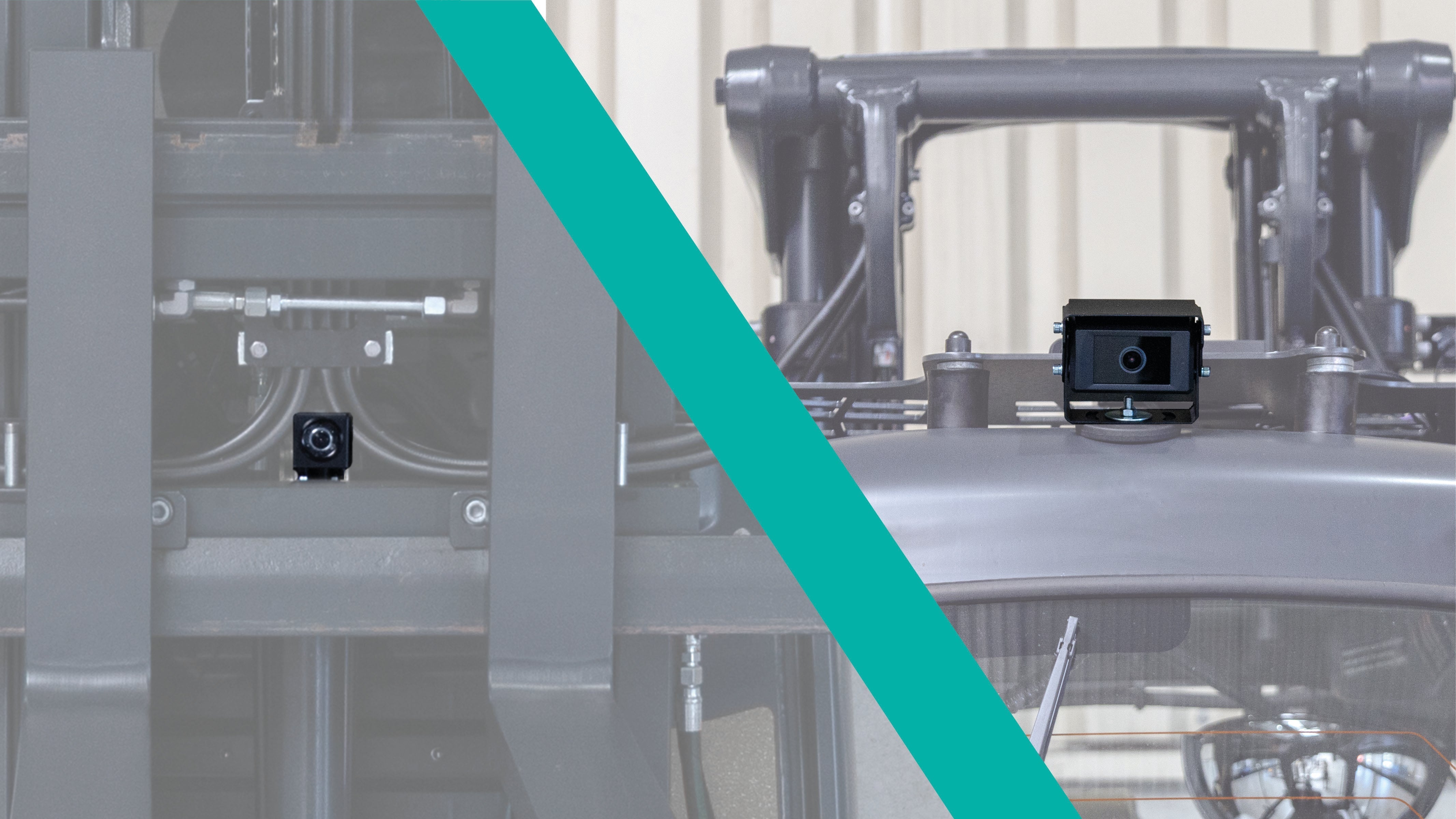
The camera is mounted, for example, on the fork carriage or mast and transmits the image to a monitor in the operator’s cab. This allows the operator to better see the position of the forks and the load.
A front camera such as the LUXX FC front-end camera can help pick up pallets more precisely and reduce damage to goods or load carriers.
In short: Anyone who needs a better overview when picking up, positioning, or storing loads will benefit from a front camera.

When is a rear view camera useful?
A rear view camera is the right choice when the biggest blind spot is behind the forklift.
This applies in particular to:
- frequent reversing
- cramped warehouses and production halls
- maneuvering
- areas with limited visibility and intersections
- areas with pedestrian traffic
The backward camera displays the area behind the forklift on a monitor for the driver. A wide field of view can help the driver spot obstacles and people sooner and see into blind spots more clearly.

The LUXX RC rear view camera is particularly helpful to the driver when maneuvering and backing up. In addition, the system features integrated person detection and offers three different detection modes for identifying danger zones:
- Horizontal trapezoidal: for monitoring a wide area behind the forklift
- Vertical: for a correspondingly vertically oriented detection zone
- Semicircular: for monitoring a semicircular area behind the vehicle
The “horizontal trapezoidal” detection mode is preset by default. Depending on the application, the detection zones can be adjusted via smartphone or computer. The number and size of the zones can be customized, and specific areas of the field of view can be selectively enabled or disabled.
If a person is detected within the defined area, a visual or audible warning can be triggered. This allows person detection to be adapted to different operating conditions in the warehouse or on the production floor.
In short: Anyone who frequently drives in reverse or works in tight, hard-to-see areas will benefit from a backup camera with customizable hazard zone detection.
Easily retrofit cameras on a forklift
Poor visibility does not automatically mean that a forklift needs to be replaced or extensively modified. Camera systems can be retrofitted and can specifically expand the field of view in areas where the operator has limited visibility from the operator’s seat.
It’s important to note that cameras do not replace the operator’s attention. They provide additional support for a better overview during daily operations.
Conclusion: The most important factor is the largest gap in visibility
A front camera improves visibility of the forks, the load, and the area in front of the forklift. A rearview camera expands visibility behind the forklift and assists with reversing and maneuvering. With various detection modes and customizable danger zones, the LUXX RC can also be adapted to different operating conditions.
Operators working in both areas with limited visibility can combine both systems.

Leave a comment
This site is protected by hCaptcha and the hCaptcha Privacy Policy and Terms of Service apply.