
Warehouse Damage: How Much It Really Costs—and How to Reduce It
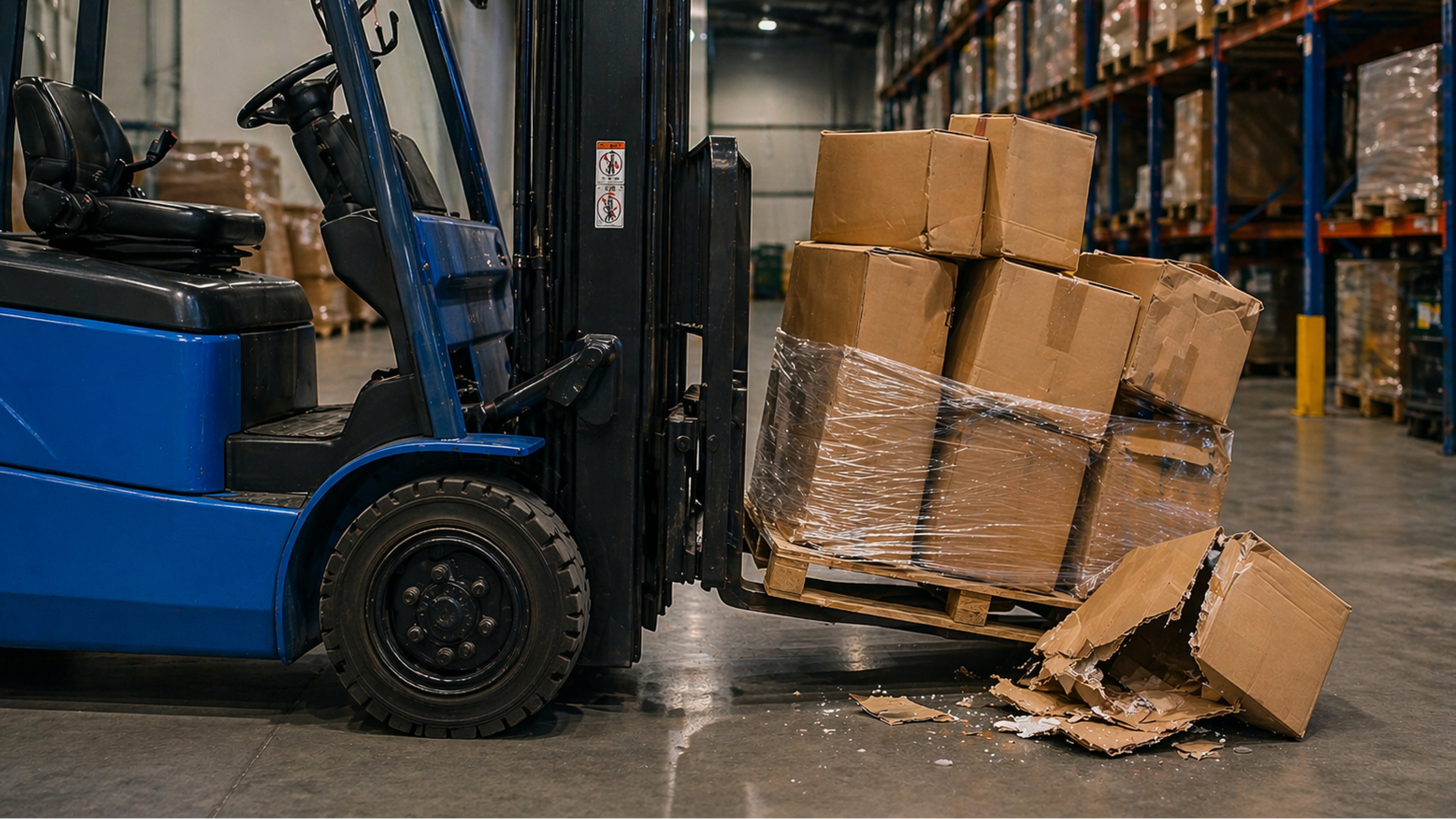
Damage in the warehouse is rarely caused by a major incident. In practice, it’s the accumulation of many small incidents over weeks and months: pallets struck by forklifts, damaged boxes, dented shelf beams, or shifted cargo.
What is often underestimated is that the biggest cost factor isn’t the visible damage itself, but rather the additional labor hours, delays, and follow-up processes.
What “minor” damage actually costs
A typical example from everyday warehouse operations:
A pallet of goods is damaged by the forklift tines during receiving. Result:
- Cardboard packaging & possibly goods damaged
- Goods must be repackaged
- Transport is interrupted
Rough sample calculation:
- 2 employees each spend 10 minutes → 20 minutes of labor time
- Internal hourly rate (including payroll taxes): approx. €35
- Labor costs: approx. €12
Plus:
- Damaged packaging or goods: e.g., €20–40
- Delays in the workflow
- Opportunity costs
➡ A single “minor” incident can easily cost €40–60.
If this happens just three times a week, the result is:
- approx. €150 per week
- approx. €7,500 per year – without a single serious accident.
What companies often overlook: the cost of time
In addition to property damage, there are hidden time losses:
- Disruption of supply chains
- Additional coordination
- Re-entry and sorting
- Blocked aisles or storage spaces
If we calculate just 5 minutes of additional effort per incident and only 2 incidents per shift, this results in:
- 10 minutes per day
- approx. 40 hours per year
- additional labor costs with no added value
Why incidents keep happening
In most cases, the causes are known:
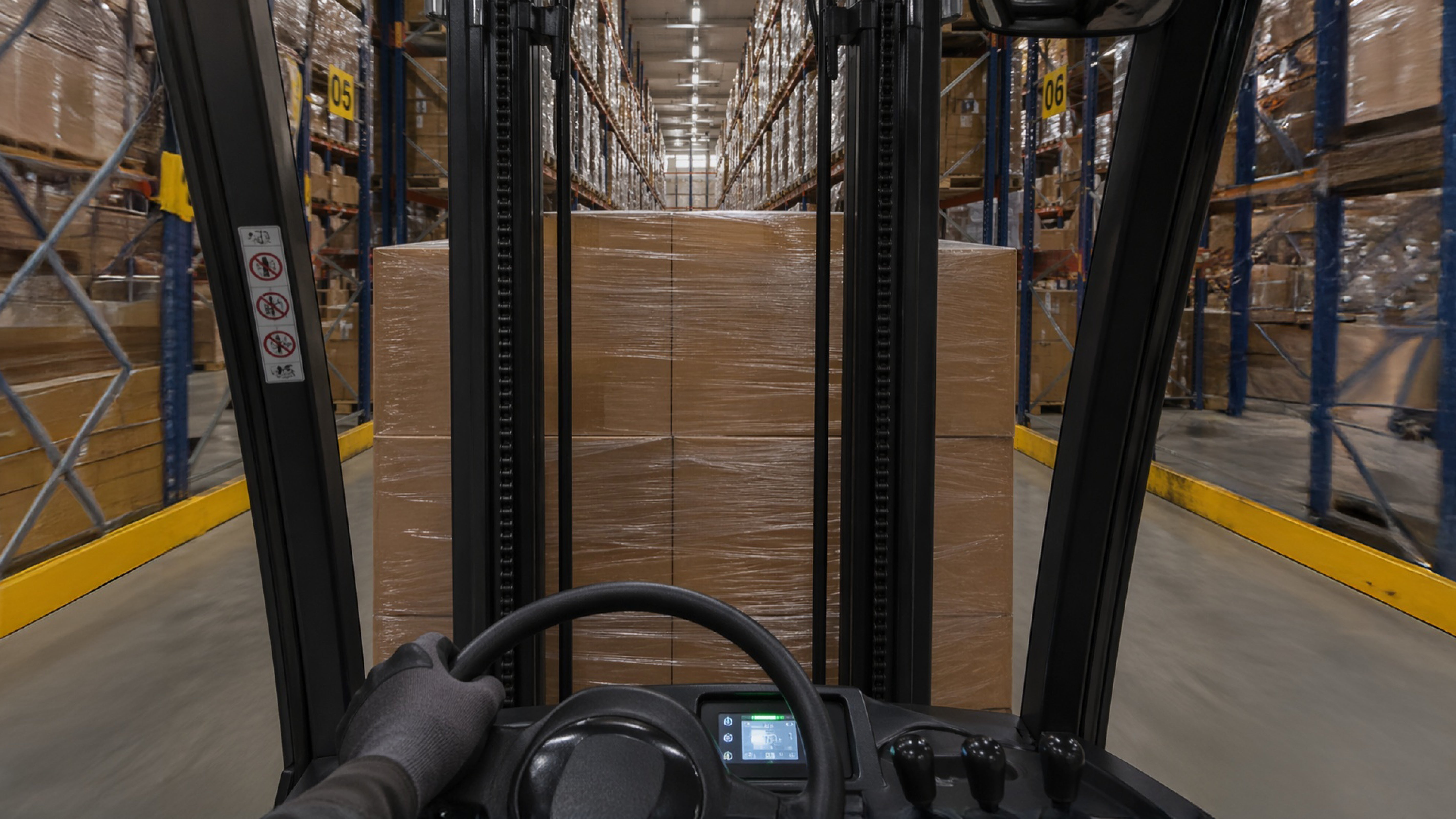
- restricted visibility when operating a forklift
- load shifting on the forks
- lack of visual orientation when approaching
- insufficient awareness of the forklift’s surroundings
These are rarely driving errors, but rather structural weaknesses.
What specifically helps in each case?
Without complicating processes, many causes of damage can be remedied through technical solutions:
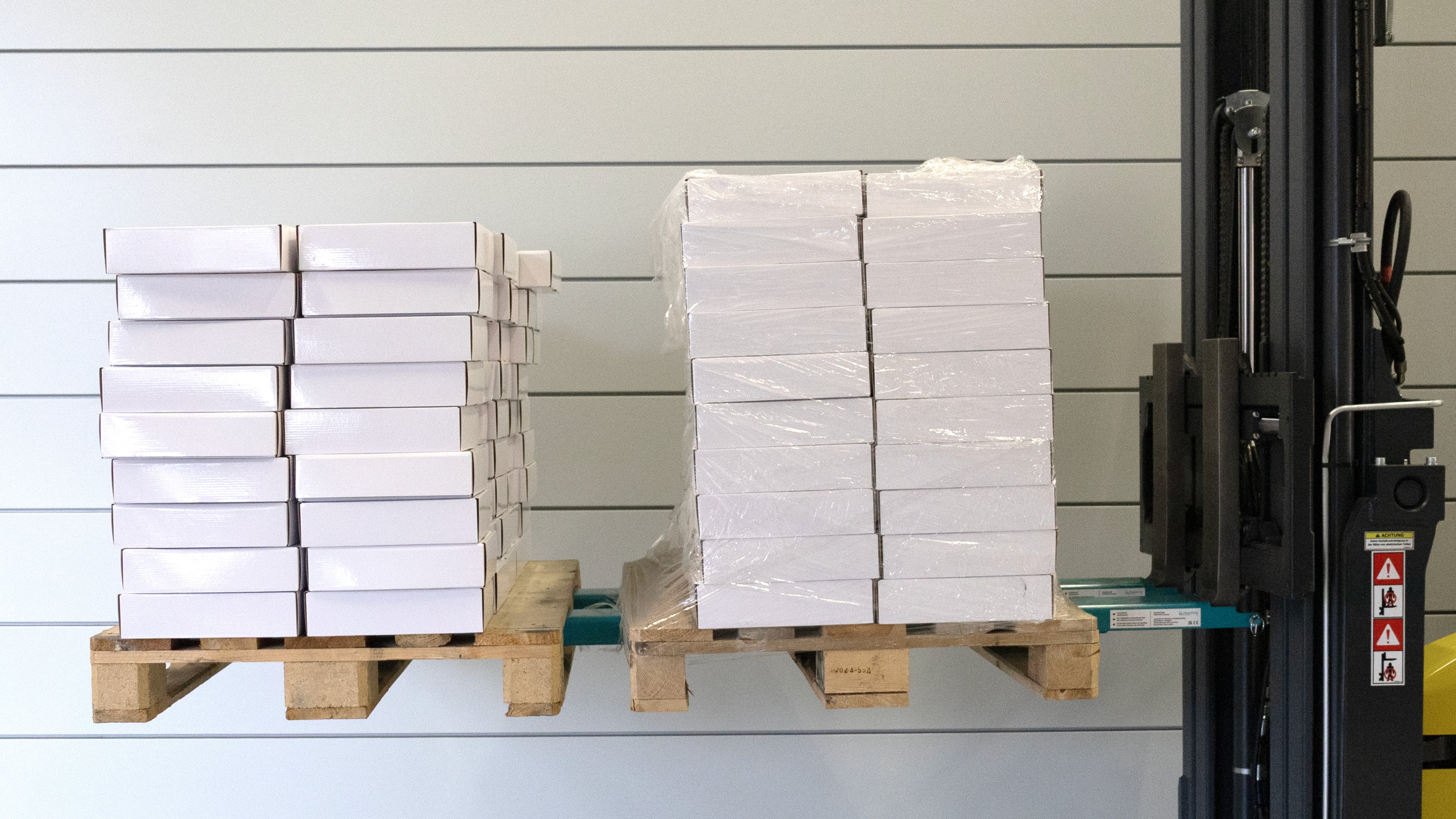
Significantly reduces cargo slippage on the forks.
Particularly helpful for:
- Transport without load carriers
- Wrapped pallets
- Plastic pallets, mesh boxes
- Frequent acceleration and braking

Protects sensitive goods in the rear fork area from impact damage.
Typical applications:
- Sensitive products
- Protruding goods

Forklift cameras LUXX / Camera & laser systems LIZZARD
Improve visibility and precision when approaching pallets.
Particularly effective for:
- Tall or wide loads
- High-bay racking
- Reversing


Increase the visibility of the forklift in warehouse traffic.
Reduce collisions with people and other vehicles—especially in areas with limited visibility.

Conclusion: Damage is not inevitable
Damage in the warehouse rarely occurs by chance. It is usually the result of:
- poor visibility
- unstable loads
- lack of protective equipment
Addressing these issues not only reduces damage in the warehouse but also saves significant time and costs. Technical retrofit solutions often pay for themselves faster than initially expected—especially during ongoing operations.

Leave a comment
This site is protected by hCaptcha and the hCaptcha Privacy Policy and Terms of Service apply.