

CleverForks explains: What is the load center?
Anyone who transports loads with a forklift must not only pay attention to the weight of the load. The position of the load center of gravity also plays a crucial role. Because even if the permissible load weight is not exceeded, an unfavorable load distribution can impair the forklift's load-bearing capacity.
But what exactly is the load center of gravity, how is it determined, and why is it so important for safe transport?
What is meant by the load center of gravity?
The load center of gravity is the point at which the entire gravitational force of a load can be thought to be concentrated. With a uniformly distributed, symmetrical load, this point is in the geometric center.
If, on the other hand, the load is unevenly distributed, for example because heavy components are only on one side, the center of gravity shifts accordingly.
For transport with a forklift, the load center distance is particularly critical. It describes the horizontal distance between the front face of the fork back and the center of gravity of the picked-up load.
This distance is usually stated in millimeters and is an important parameter when determining the permissible load-bearing capacity.
How is the load center distance calculated?
With a uniformly distributed load, the horizontal load center distance can be easily determined.
Load center distance = load depth ÷ 2
A practical example:
A uniformly loaded pallet has a depth of 1,200 mm in the direction of the forks. If the pallet is picked up fully against the fork back, its center of gravity is located in the middle at:
1,200 mm ÷ 2 = 600 mm load center distance
If, however, the load is 1,600 mm deep, the load center distance is already 800 mm under the same conditions.
Important: This simple calculation only applies to uniformly distributed loads. With an uneven weight distribution, the actual center of gravity must be taken into account.
What influence does the load center of gravity have on the load-bearing capacity?
The further the load center of gravity is from the fork back, the greater the load moment becomes. This can reduce the forklift's permissible load-bearing capacity.
This means: Two loads with identical weight can stress the forklift differently if their load center distances differ.
An example illustrates the connection:
A forklift has a rated capacity of 2,500 kg at a load center distance of 500 mm.
If a load with a center of gravity distance of 600 mm is picked up, the load moment increases by 20% for the same weight.
However, this does not mean that the permissible load-bearing capacity automatically drops by exactly this percentage. The load that may actually still be picked up is determined by the load capacity plate or the load chart of the respective forklift.
Why is the load center of gravity also important for forks?
Not only the forklift itself, but also the installed forks have a defined load-bearing capacity. This is specified for a certain load center distance.
For example, a fork can be designed for a load-bearing capacity of 2,000 kg at a load center distance of 500 mm. If the center of gravity shifts further forward, the bending moment acting on the fork increases.
Therefore, it is important when selecting forks not to pay attention solely to the specified load-bearing capacity, but also to the associated load center distance.
It is always critical that both the load-bearing capacity of the forks and that of the entire forklift are sufficient for the respective application.
What happens with an unfavorable load center of gravity?
A load center of gravity that is too far forward or to the side can entail various risks:
- Reduced stability: The forklift can become unstable, especially with a raised load or unfavorable driving maneuvers.
- Overloading of the forks: An increased load center distance leads to higher bending stress.
- Limited load-bearing capacity: The originally stated rated capacity of the forklift may no longer be fully available.
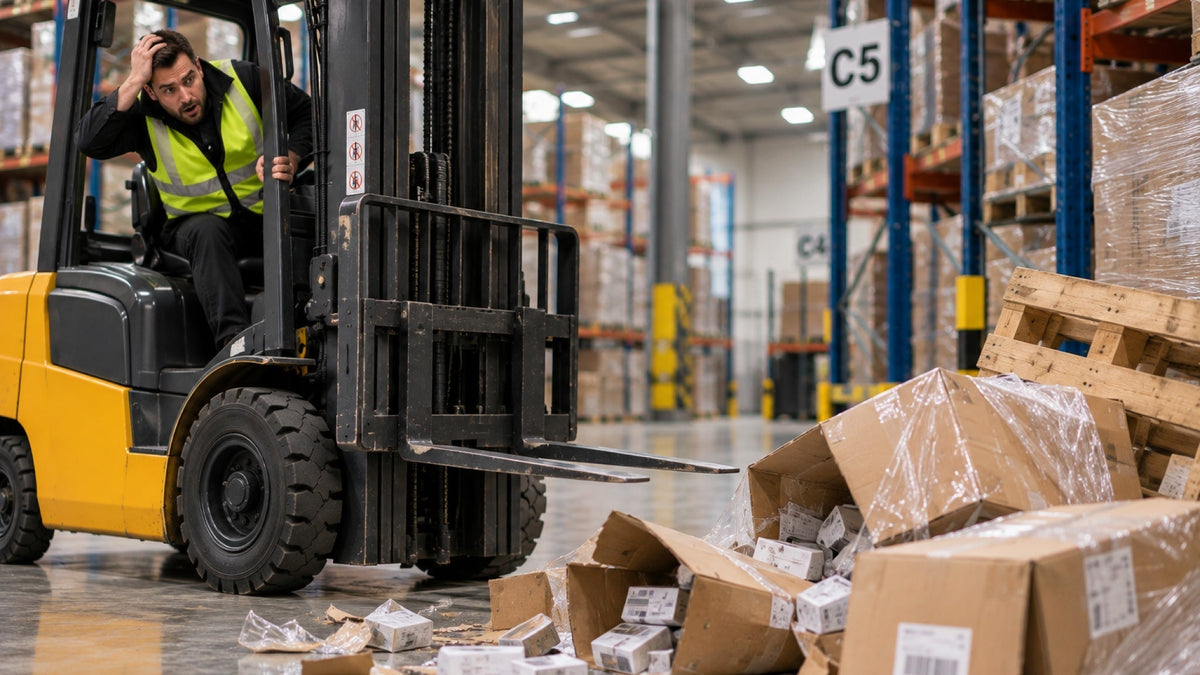
- Increased accident risk: Improperly distributed or insufficiently secured loads can slip, tip over, or fall.
What should one pay attention to in practice?
For safe load transport, some basic rules should be observed:
- Pick up loads as close to the fork back as possible.
- Ensure even weight distribution.
- Consider the actual load center of gravity, especially with asymmetrical or bulky goods.
- Observe the forklift's load capacity plate.
- Check the permissible load-bearing capacity and the specified load center distance of the forks.
- Use suitable fork lengths for the respective load carriers.
Conclusion: The load center of gravity is a deciding factor
The load center of gravity is a crucial parameter for the safe transport of loads with a forklift. It is not just the weight of the load that determines whether it can be picked up safely, but also the position of its center of gravity.
The greater the load center distance, the higher the stress for the same load weight.
Those who take the load center of gravity into account and select forklifts and forks suited to the transport task create an important foundation for safe and efficient material transport.
Do you need suitable forks for your forklift?
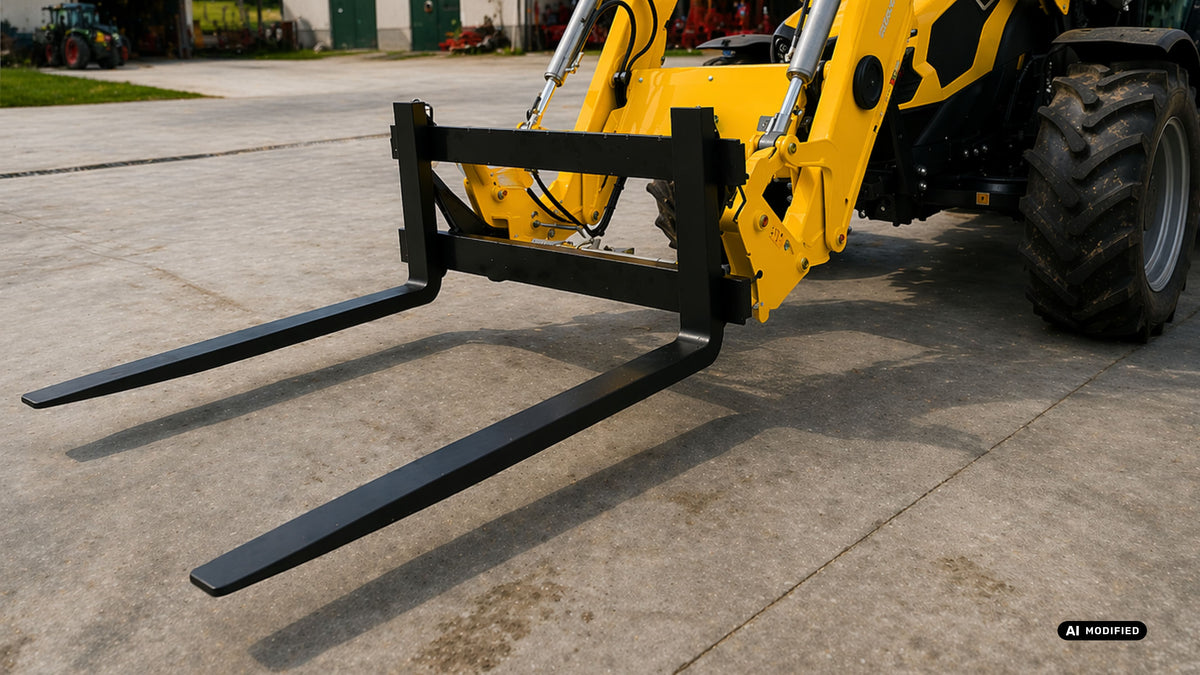
At CleverForks you will find high-quality forks in various dimensions and load-bearing capacities for numerous areas of application.

Leave a comment
This site is protected by hCaptcha and the hCaptcha Privacy Policy and Terms of Service apply.